Celebrating the Annunciation and Incarnation
|
|
Importance |
|
|
|
|
|
|






The Importance of the Solemnity of the Annunciation/Incarnation
The Catechism of the Catholic Church
“The coming of God’s Son to earth is an event of such immensity that God willed to prepare for it over centuries. He makes everything converge on Christ: all the rituals and sacrifices, figures and symbols of the ‘First Covenant.’ ” (CCC) 522
The Incarnation is the turning point in all of human history (BC to AD).
This Solemnity offers the Church a rich and powerful means of evangelization. However, in the liturgical calendar of the Roman Rite the Christological feasts of Lent and Easter “out rank” this “Marian” feast. And so the Solemnity of the Annunciation is always pushed to a weekday celebration. (For example see calendar for 2007 AD.) And this is sad when we consider that only a few Catholics attend daily Mass. The Annunciation/Incarnation is intrinsically tied to Good Friday and to the ultimate feast of Easter. Christ could not have risen if He hadn’t died, and He couldn’t have died unless He had been Incarnated into a body.
· AND THE WORD BECAME FLESH
Pope John Paul II
“The mystery of the Incarnation constitutes the climax of this giving, this divine self-communication.
The conception and birth of Jesus Christ are in fact the greatest work accomplished by the Holy Spirit in the history of creation and salvation: the supreme grace "the grace of union," source of every other grace, as St. Thomas explains.200 The great Jubilee refers to this work and also-if we penetrate its depths-to the author of this work, to the person of the Holy Spirit.” (The Holy Spirit in the Life of the Church and the World, [#50])
Pope Benedict XVI
The coming of the Messiah, foretold by the Prophets, is qualitatively the most important event of all history, on which it confers its ultimate and full meaning. It is not historical and political coordinates that condition God's choice, but on the contrary, the event of the Incarnation that “fills” history with value and meaning. (Homily of December 31, 2006)
… it was no small usefulness which the Incarnation mentioned brought to the universe …To be sure, the power of the divine Incarnation is equal to the salvation ‘of all men, but the fact that some are not saved thereby comes from their indisposition: they are unwilling to take unto themselves the fruit of the Incarnation; they do not cleave to the incarnate God by faith and love.
(Contra Gentiles, Book Four: Salvation, Chapter 55:10)
Byzantine Catholic Church in America
states the following on their
website:
In the Syrian Church, the Feast of the Annunciation (25 March) is an absolute priority. Even if 25 March is Good Friday, the services of Good Friday aren't allowed to proceed until after the Holy Qurbana is celebrated for the Annunciation.
This year, 25 March is Monday of Holy Week (for those of us following the Gregorian calendar). The Syrian Church will of course celebrate Holy Qurbana on this day, even though it's normally forbidden except for Sundays, Mid-Lent, Fortieth day, Lazarus Saturday, Holy Thursday, and the Saturday of Good Tidings. …The Annunciation as one of the Twelve Great Feasts must be honored with the celebration of the Divine Liturgy, even if it coincides with Great Friday. If it coincides with Pascha, which I believe can only happen with the Julian Calendar, both Annunciation and Pascha texts are taken.
The importance of the Incarnation is also demonstrated when we adore God with the Divine Praises. Notice how near the top it is. Notice the glorious truths that we proclaim after it.
The Divine Praises.
Blessed be God.
Blessed be his holy name.
Blessed be Jesus Christ, true God and true man.
Blessed be the name of Jesus.
Blessed be his most Sacred Heart.
Blessed be his most Precious Blood.
Blessed be Jesus in the most holy sacrament of the altar.
Blessed be the Holy Spirit, the Paraclete.
Blessed be the great Mother of God, Mary most holy.
Blessed be her holy and Immaculate Conception.
Blessed be her glorious Assumption.
Blessed be the name of Mary, virgin and Mother.
Blessed be St. Joseph, her most chaste spouse.
Blessed be God in his angels and in his saints.
Amen.
Placing this all important Solemnity in a role of Sunday prominence in our sacred liturgical calendar would have numerous benefits. However, it seems to deserve to be placed there on its own merit.
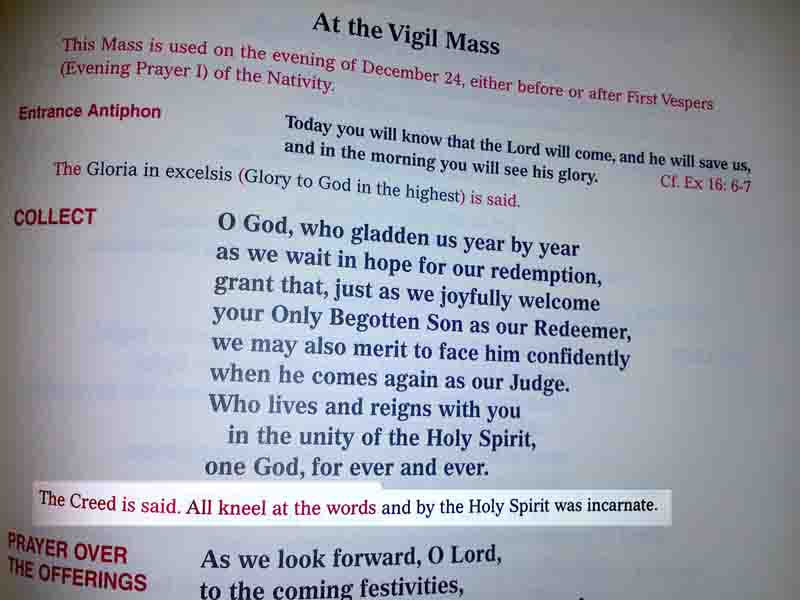
During the Solemnity of the Annunciation the Church call us to worship God with a genuflection when we profess the creed at the words “and by the Holy Spirit was incarnate of the Virgin Mary, and became man.”
The Paschal Mystery requires that God become a Man. A person might suppose that God could have come into our physical world without being born, since He could have come as a fully grown man. And so, Christmas is not inherently essential to our having the most important feasts of Good Friday and Easter Sunday. However, the Incarnation - in some form - is indispensable and is therefore more important than Christmas.
 |
 |
|
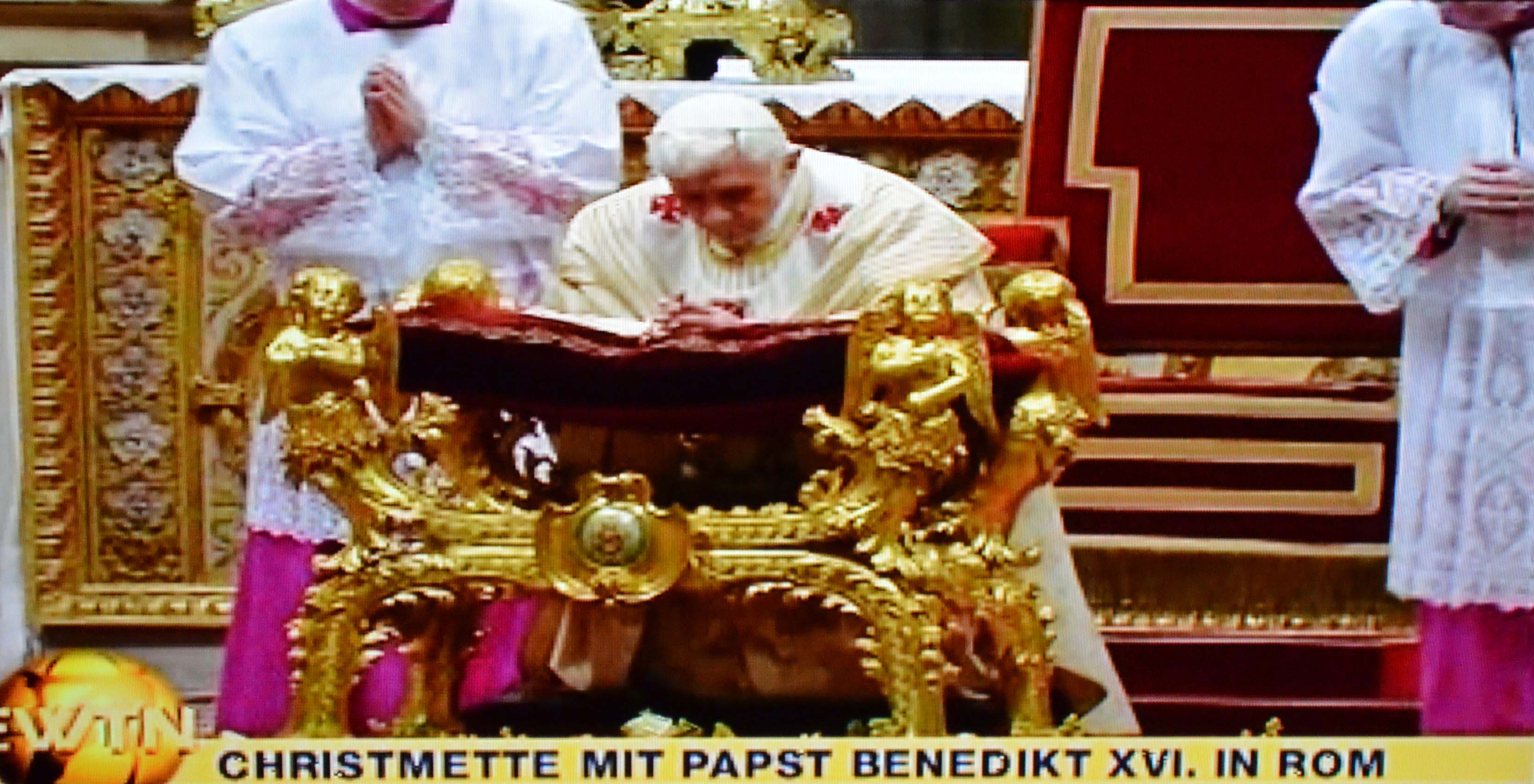
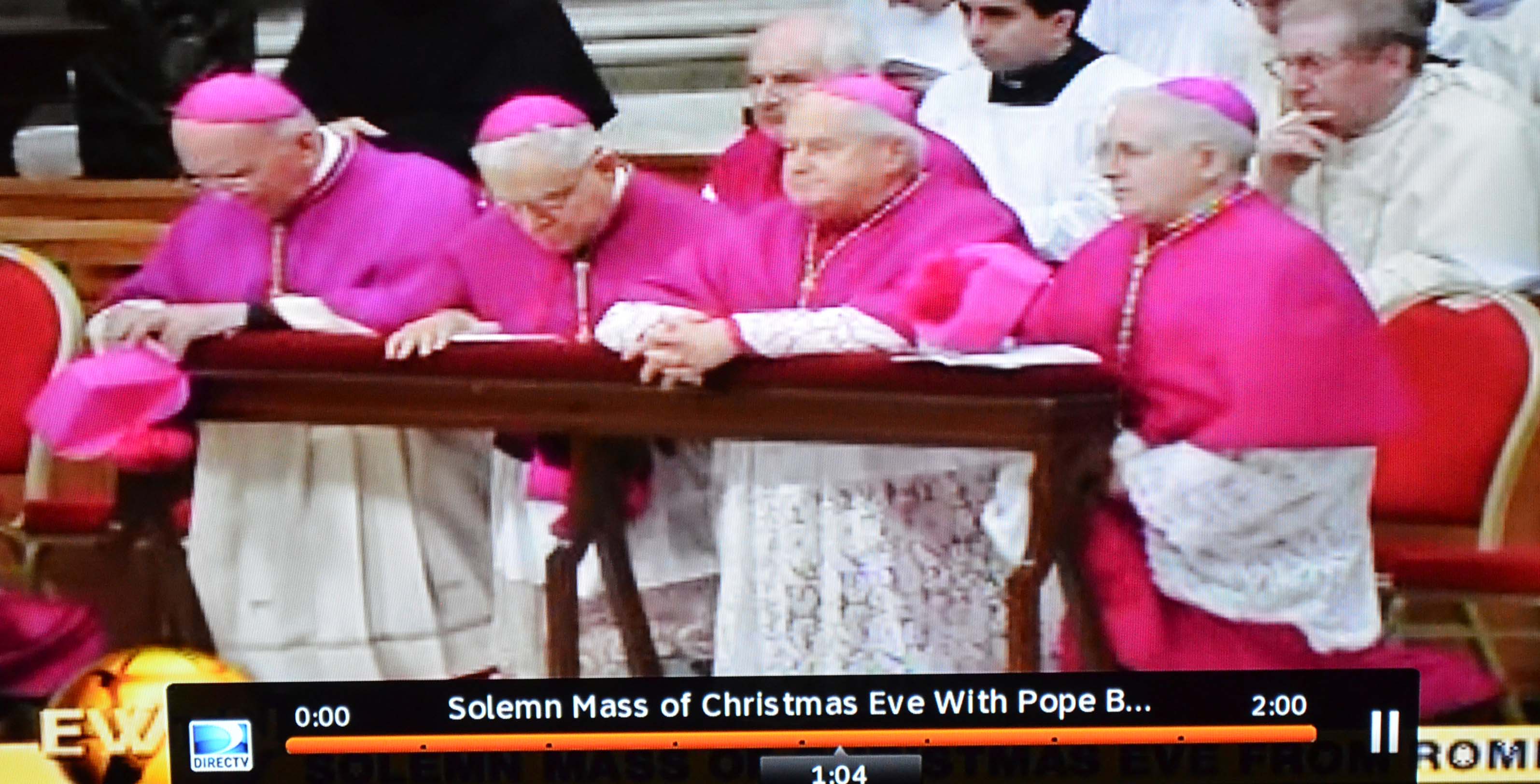
At Christmas Mass the Holy
Father Pope Benedict XVI kneels during the Creed when the
following words are prayed: “and by the Holy Spirit was incarnate of the Virgin Mary, and became man.” As soon as he kneels so do all the other priests, bishops, cardinals, and the laity as well. It is quite moving to see the Supreme Pontiff honor God and go to his knees as we profess our faith in this awesome mystery of the Incarnation. See more
|
 |
To Continue see

Sections:
Main,
Importance,
Pro-Life,
Mary,
Lent,
Easter,
and Solution.